

Can You Add Texture to an Apartment on a Budget?
Editorial TeamLast Updated: October 29, 2026
Quick Summary
You can add apartment texture on a budget with removable, renter-safe pieces like peel-and-stick panels, fabric hangings, and layered textiles. A throw, runner, or cushions are among the most affordable options, and a single large textured piece changes a room more than several small ones.
- Test peel-and-stick products on a closet wall for seven days before full application.
- Layer three textile weights: chunky knit, woven cotton, and velvet or chenille.
- A 4 x 6 foot flatweave jute rug typically runs $30 to $50 at big-box retailers.
- Keep to three textures per room: one dominant, one secondary, one accent.
- Pick two planes per room, not three, to avoid a cramped small space.
Table of Contents
- Why Texture Changes a Rental More Than Color
- Cheap Apartment Wall Decor That Adds Depth, Not Holes
- Textiles and Soft Furnishings: The Cheapest Texture You Can Buy
- Rental-Friendly Apartment Decor That Survives Moving Day
- DIY Apartment Makeover Ideas Under $50
- Small Apartment Decorating Ideas That Layer Without Clutter
- Mixing Textures Without Visual Overload
- Build Your Texture Plan With Practical Home Essentials
- Frequently Asked Questions
Why Texture Changes a Rental More Than Color
Paint is the thing renters reach for first, and it's often the thing a lease forbids.
Texture is the physical surface quality of a room, the way light catches a woven throw, a nubby rug, or a linen curtain.
Renters often say the space feels flat and they can't tell why. Usually it's not the color scheme.
Below, we'll show you exactly which textures cost the least, which ones survive a move, and how to layer them without turning a small room into a flea market.
Cheap Apartment Wall Decor That Adds Depth, Not Holes
The best cheap apartment wall decor adds shadow and depth without a single nail. Renters lose their deposit over picture hooks far more often than they lose it over anything else.
Wall texture comes in three flavors: peel-and-stick, fabric, and lean-and-hang. Each has a different damage profile.
| Wall Treatment | Typical Cost | Damage Risk | Best For |
|---|---|---|---|
| Peel-and-stick panels | Low | Low, if wall is prepped | Accent walls, headboards |
| Fabric hangings | Low to mid | Very low | Large blank walls |
| Leaning mirrors and art | Mid | None | Narrow rooms, dark corners |
Peel-and-Stick and Removable Wall Treatments
Peel-and-stick wallpaper, faux brick panels, and removable tile sheets give you real surface relief. A common mistake is applying them to freshly painted walls. Most manufacturers recommend waiting a few weeks so the paint fully cures, or the adhesive pulls the finish when you remove it.
Test a small square in a closet first. If it lifts cleanly after a week, you're safe.
Hangings, Tapestries and Fabric Panels
Fabric is the forgiving option. A tapestry or a large fabric panel covers a big blank wall, softens echo, and comes down in seconds. Hang it from a tension rod wedged inside a window frame or a curtain rod you already own.
Textiles and Soft Furnishings: The Cheapest Texture You Can Buy
Textiles are often one of the most affordable ways to add texture. A throw, a runner, or a set of cushions can move with you to the next place.
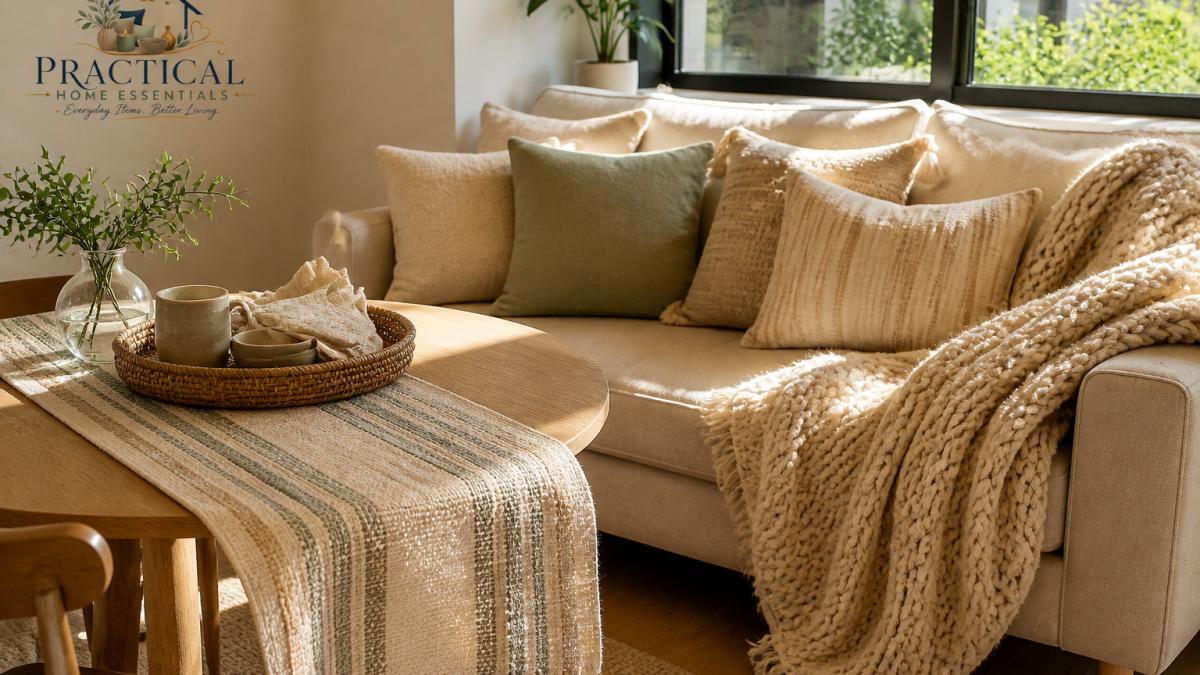
Layer three weights in any room and it stops feeling like a rental:
- Chunky knit for warmth and bulk
- Woven cotton for a crisp, natural weave
- Velvet or chenille for a soft sheen that catches light
Small textiles count too. A woven table runner adds pattern and fringe to a dining table for very little. The Federal Trade Commission's guidance on textile labeling is worth a skim if you want to know what "cotton" actually means on a tag.
Rental-Friendly Apartment Decor That Survives Moving Day
The test of rental-friendly apartment decor is simple: can you pack it in an hour and hang it again somewhere else? If the answer is no, it's not rental decor, it's a fixture.
That rules out anything glued, grouted, or drilled. It also rules out heavy pieces that only fit one wall.
Renter-Safe Installation and Removal
Follow this order and you'll keep your deposit:
- Clean the wall with a damp cloth and let it dry fully.
- Test adhesive on an inconspicuous patch for seven days.
- Apply from the top down, smoothing air bubbles as you go.
- Remove slowly at a low angle, warming the adhesive with a hair dryer on low.
- Patch any small marks with a dab of matching paint.
Door knobs are the sneaky one. They punch holes in drywall behind the door and scuff the paint. A door knob wall shield protects the wall from marks without permanent fixes.
Renters can check official consumer resources on rental housing before move-out day.
Fennco Striped Tassel Table Runner, 16 × 72 Inch →
DIY Apartment Makeover Ideas Under $50
A low-cost makeover can focus on one or two texture anchors per room. The trick is picking projects where the material itself does the visual work, so you are not paying for labor or tools.
Here is one way to spend a small budget, with typical materials and rough costs:
- Woven baskets for blanket storage. A seagrass or water-hyacinth basket in the $15 to $30 range doubles as texture on an open shelf and hides the throw you are not using. Thrift stores routinely stock these for under $10; check the handle joints for splitting before you buy.
- A jute or cotton rug under the coffee table. A 4 × 6 foot flatweave jute rug typically runs $30 to $50 at big-box retailers. Jute sheds for the first week, so vacuum it twice before you decide it was a mistake.
- Linen-look curtains on a tension rod. A single panel in a linen-blend fabric is often $12 to $25. A tension rod adds $8 to $15 and installs without hardware. Hang the rod high and wide so the fabric pools slightly at the floor; that pooling is free texture.
- A potted plant in a textured ceramic pot. A 6-inch potted pothos or snake plant runs $10 to $20, and a ribbed or speckled ceramic pot adds another $8 to $15. The pot matters as much as the plant: a smooth plastic nursery pot reads as flat.
- A gallery of leaning frames on a dresser top. Thrifted frames at $2 to $5 each, sprayed a single matte color, give you layered depth without a single nail. Lean them against the wall in overlapping sizes rather than hanging them.
Two DIY projects stretch the budget further without permanent changes:
- Fabric-wrapped canvas art. Buy a cheap stretched canvas or reuse one from a thrift store, wrap it in a yard of textured fabric (burlap, linen, or a heavy cotton), and staple the fabric to the back of the frame. One yard of burlap is often under $5, and the result is a large, tactile wall piece that hangs from a single removable hook.
- A woven wall hanging made from a thrifted scarf or runner. A tension rod and an old textile you already own cost nothing. Fold the fabric over the rod, secure it with clip rings, and you have a soft vertical texture that comes down in seconds at move-out.
For more inspiration at this price point, our guide to 5 budget-friendly aesthetic room decor ideas for students covers lighting and storage hacks that pair well with texture. If you want to know what a fiber label actually promises before you buy, the Federal Trade Commission's textile labeling guidance explains the rules manufacturers follow.
Small Apartment Decorating Ideas That Layer Without Clutter
Small apartment decorating ideas work when every textured piece earns its footprint. In a studio or a tight one-bedroom, texture and clutter look identical from three feet away.
Here is one way to handle texture room by room in a compact rental:
- Living room. One nubby throw on the sofa, one flatweave rug under the coffee table, and one textured cushion. Keep the coffee table surface bare or nearly so; a tray with a single woven bowl is enough. If the sofa is already a visible weave, skip the throw and let the rug carry the texture.
- Bedroom. A linen or washed-cotton duvet cover does more than a patterned comforter because the wrinkles and slubs catch light. Add one chunky knit throw at the foot of the bed and a single textured lumbar pillow. Resist layering three pillow sizes; in a small room they eat the bed.
- Kitchen. Texture here is about materials, not decor. A woven runner on the counter, a couple of wooden cutting boards leaned against the backsplash, and a ceramic crock for utensils add warmth without taking up cabinet space. Avoid fabric near the stove; grease ruins it.
- Entryway. A coir or jute doormat, a woven basket for keys and mail, and a single hook with a textured tote bag. The entryway is where texture signals the rest of the apartment, so make the doormat the boldest piece.
A useful rule for small rooms is one texture per surface. One throw on the sofa. One runner on the table. One rug on the floor. If a surface already has pattern, leave it bare.
Vertical texture is your friend in small rooms. For a deeper dive, see our guide on how to pull off minimalist decor in a small rental.
Mixing Textures Without Visual Overload
Three textures per room is the ceiling. Four starts to feel busy, and five looks like a thrift store exploded.
Pick a dominant texture, a secondary one, and a small accent. Rough jute rug, smooth linen curtains, one velvet cushion. The contrast does the work.
Watch out: matching every texture to the same tone flattens the room. Texture needs contrast in sheen as well as weave. Pair something matte with something that reflects a little light.
Build Your Texture Plan With Practical Home Essentials
Here's the honest challenge: texture is easy to buy and hard to buy well. Most renters either skip it entirely or overcorrect into a cluttered room.
We built PracticalHomeEssentials.com for the middle path. You get a curated selection of home goods, delivery to your door, and free shipping available, so you can try a runner or a throw without a big commitment. Our customer support team is available if you have questions about your order.
Get started with PracticalHomeEssentials.com and give your rental the depth it's missing.
Frequently Asked Questions
How can I add apartment texture on a tight budget?
Start with textiles, because they cost the least per square foot of visual change. A woven cotton table runner like the Fennco striped tassel runner at $18.99 adds pattern, fringe and fabric weight to a dining table in one purchase. Throw blankets, cushion covers and a secondhand area rug do the same for a living room. Curtains hung on a tension rod add vertical texture without drilling.
What are the best cheap apartment wall decor options for renters?
Peel-and-stick wallpaper panels, fabric hangings, tapestries, lightweight canvas prints and removable adhesive hooks cover the most wall for the least money. Command-style hooks hold lightweight frames and fabric without leaving holes. Avoid anything requiring anchors or screws unless your lease allows them, and check the removal instructions on any adhesive product before it touches painted drywall.
Which fabrics add the most texture to a room?
Chunky knits, boucle, linen, velvet, jute and woven cotton read as texture from across a room, while smooth cotton and polyester blends read as flat. For impact per dollar, choose a nubby throw, a linen curtain panel and a jute or wool-blend rug. Mixing one rough weave with one smooth fabric creates contrast without spending much. The Fennco table runner's woven cotton and knotted tassels are a low-cost example of a small textile doing a lot of visual work.
How do I make a small apartment feel layered without adding clutter?
Layer in three passes and stop: floor, furniture, walls. Put a rug down, add one textile per seating surface, then hang one large piece rather than several small ones. Keep to two or three materials per room so the eye reads texture instead of noise. Store anything you are not displaying, and choose pieces that do two jobs, such as a sideboard that hides tableware behind a sliding glass door while its black wood finish adds a solid, matte surface against lighter walls.
Your apartment doesn't need a renovation. It needs three textures and an afternoon. Start with the room you spend the most time in, add one woven piece and one soft piece, and see how different the space feels before you buy anything else.
