

Tips for Buying Furniture Online Safely
Editorial TeamTable of Contents
- Set a Budget and Research Your Options
- How to Tell if an Online Furniture Store Is Legitimate
- How to Avoid Furniture Scams Online
- Create Your Online Furniture Shopping Checklist
- Understand Furniture Return and Delivery Policies
- Measure Your Space and Verify Dimensions
- Read Reviews and Ratings Strategically
- Tips for Buying Furniture Online Safely: Key Takeaways
- Frequently Asked Questions
Last Updated: October 18, 2026
Set a Budget and Research Your Options
Before you start shopping, decide how much you can spend. This single step prevents impulse purchases and buyer's remorse.
Next, research the types of furniture that fit your room. Measure your doorways, hallways, and the actual space where pieces will go. Jot down these numbers. They matter more than you think.
Write down what you actually need versus what you want. A sofa is essential. A decorative ottoman might wait. This distinction saves money and keeps your space functional.
Browse multiple retailers to understand the market. Look at quality levels, styles, and price ranges. This research phase takes time, but it's your best defense against overpaying or buying something that doesn't work.
How to Tell if an Online Furniture Store Is Legitimate
Not every online furniture store is trustworthy. Scammers create fake websites that look professional but disappear after taking your money. Learning to spot a legitimate retailer protects your wallet and your time.
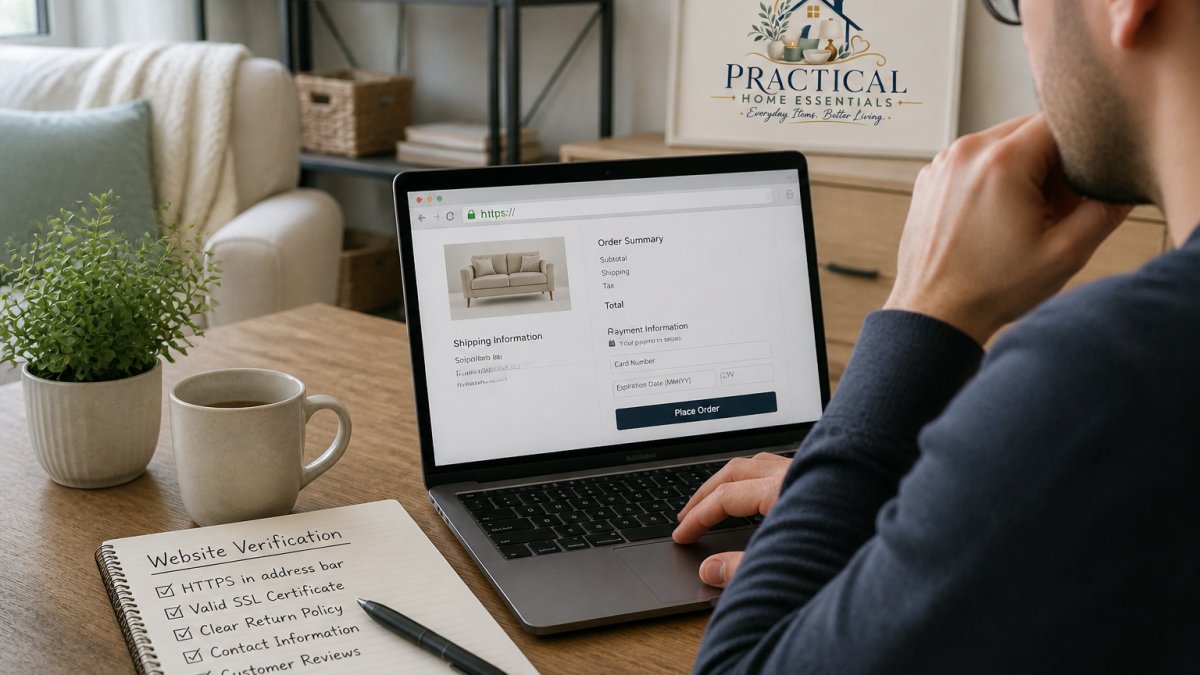
A legitimate furniture store has clear contact information, a real business address, and transparent policies. The website should load quickly and display professional product photos. Customer reviews should exist on multiple platforms, not just the retailer's own site.
Check for SSL Certificates and Secure Payment
An SSL certificate encrypts your payment information. Look for the padlock icon in your browser's address bar before you enter any credit card details. The URL should start with "https://" not "http://".
Secure payment options include credit cards, PayPal, and established digital wallets. Avoid retailers that only accept wire transfers, cryptocurrency, or gift cards. These payment methods offer no buyer protection.
When you enter payment information, the page should feel secure. Your browser may display a security warning if something is wrong. Trust that warning and leave the site immediately.
Verify Business Registration and Contact Information
Search the retailer's name on the Better Business Bureau website. Check state business registration databases to confirm the company is real and registered where it claims to be. A legitimate business has nothing to hide.
Look for a physical address on the website. Call the phone number to confirm someone answers. Send an email to their customer service and see if they respond within 24 hours. Real businesses respond to customer inquiries.
Check the "About Us" page for company history and details. Vague language like "we've been online for years" is a red flag. Legitimate retailers share their founding date, mission, and team information.
How to Avoid Furniture Scams Online
Scammers use urgency and pressure to rush your decision. They create fake reviews, use stolen photos, and offer prices that are too good to be true. Knowing these tactics keeps you safe.
Red Flags That Signal a Scam
Prices drastically lower than competitors are suspicious. If a sofa costs $800 everywhere else but $200 on one site, question why. Legitimate retailers compete on quality and service, not by undercutting by 75%.
Stock photos instead of real product photos are a major warning sign. Scammers steal images from other websites.
Pressure tactics like "only 2 items left" or "sale ends today" are designed to bypass your judgment. Legitimate retailers don't rush customers into poor decisions.
Misspelled words, poor grammar, and broken links suggest an amateur or fraudulent operation. Professional retailers invest in quality website design and copy editing. Careless mistakes on a furniture site are a yellow flag.
Payment Security and Dispute Protection
Use a credit card, not a debit card, for online furniture purchases. Credit cards offer chargeback protection if something goes wrong (What To Do if You’re Billed for Things You Never Got, or You Get Unordered Products). Debit cards pull money directly from your account with less protection.
Check your credit card statement within days of purchase. Report any unauthorized charges immediately. Most credit card companies have zero-liability policies for fraudulent transactions.
Understand the retailer's refund and dispute process before you buy. Read their terms and conditions carefully. If they make returns difficult or impossible, shop elsewhere.
Create Your Online Furniture Shopping Checklist
A checklist keeps you organized and prevents costly mistakes. Use this before you click purchase to verify every detail.
Before You Click Purchase
Confirm the item name and product code match exactly. Retailers sometimes have similar items with different features or materials.
Check the dimensions one final time. Measure your space again if needed. Picture the furniture in your room. Will it fit through doorways?
Verify the color and material. Online photos can appear different under various lighting. Read the description to confirm fabric type, finish, and color name.
Review the delivery timeframe. Is it acceptable for your needs? Some items take 6-8 weeks to ship. Others arrive in days. Know what you're waiting for.
Confirm the total cost including shipping, taxes, and any fees. Calculate the final price so there are no surprises.
Inspecting Product Descriptions and Photos
Read every word of the product description. Look for material composition, dimensions, weight capacity, and care instructions. A thorough description shows the retailer knows their product.
Check multiple photos from different angles. Legitimate retailers show the furniture from the front, back, sides, and detail shots. If only two photos exist, ask yourself why.
Look for customer photos in the reviews section. Real customers often post pictures of furniture in their homes. These unfiltered photos show how the item actually looks and how it holds up over time.
Pay attention to what's NOT mentioned. If a description doesn't mention durability or warranty, that's telling. Quality furniture retailers highlight these features because they're proud of them.
Understand Furniture Return and Delivery Policies
Return and delivery policies determine what happens if something goes wrong. Read them before you buy, not after you receive damaged furniture.
What to Look for in Return Policies
A good return policy allows at least 30 days to inspect and return items. Some retailers offer 60 or 90 days. The longer the window, the better for you.
Check whether the retailer pays for return shipping. If you pay, a return could cost $50-$200 depending on the item size. This cost affects whether a return is worth your time.
Understand the condition requirement for returns. Can you return furniture that's been used? Some retailers require items to be unused and in original packaging.
Look for a restocking fee policy. Some retailers charge 10-20% of the purchase price to process a return. This fee comes out of your refund. Factor this into your decision.
Handling Damaged, Missing, or Incorrect Items
Document everything when your furniture arrives. Take photos and videos of the packaging and the item itself. If something is damaged, broken, or missing, photograph it immediately.
Contact the retailer within 48 hours of delivery. Most retailers require prompt notification to process damage claims.
Keep all packaging materials until the issue is resolved. Retailers often require proof of damage, and photos of the packaging help your case.
Request a replacement or refund in writing. Email creates a paper trail. Avoid phone-only conversations because they leave no record.
If the retailer refuses to help, file a dispute with your credit card company. Provide your documentation, photos, emails, and order confirmations.
Measure Your Space and Verify Dimensions
Measuring your space is the most important step in buying furniture online.
Measure the room length, width, and height. Use a tape measure, not a guess.
Measure doorways, hallways, and stairwells. Furniture must physically fit through these spaces to reach your room.
Check ceiling height if you're buying tall furniture like bookcases or armoires. Confirm there's adequate clearance for doors to open fully.
Compare your measurements to the product dimensions listed online. Add a few inches of buffer space for safety.
Create a simple floor plan on paper or use a free online tool. Draw your room to scale and sketch where furniture will go.
Read Reviews and Ratings Strategically
Customer reviews reveal truths that product descriptions hide. But not all reviews are equally useful. Learn to read them critically.
Look for detailed reviews that mention specific issues.
Check the review date. Recent reviews are more relevant than ones from years ago.
Read both positive and negative reviews. Negative reviews often highlight real problems.
Watch for fake reviews. Suspiciously glowing reviews with no detail or vague language can be fabricated. Real customers describe actual experiences.
Check the reviewer's purchase history if visible. Someone who's bought multiple items from the retailer has credibility.
Look at the retailer's response to negative reviews. Do they address complaints professionally? Do they offer solutions?
Tips for Buying Furniture Online Safely: Key Takeaways
Buying furniture online safely requires preparation, verification, and caution. Start by setting a budget and measuring your space precisely.
Verify that online retailers are legitimate by checking for SSL certificates, business registration, and responsive customer service.
Inspect product descriptions and photos carefully. Look for specific details about materials, dimensions, and construction. Customer reviews reveal how furniture actually performs over time.
Understand return and delivery policies before you buy.
Document everything. Keep order confirmations, photos of packaging and items, and all customer service correspondence.
When buying furniture online, patience and research are your best tools. Take time to verify retailers, compare options, and read reviews.
Frequently Asked Questions
What should I check before buying furniture online?
Before purchasing, verify the seller's legitimacy by checking for SSL certificates, business registration, and contact information. Inspect product photos for multiple angles and close-ups. Read the product description carefully, including dimensions, materials, and assembly requirements. Check customer reviews on the retailer's site and independent platforms. Confirm the return policy, shipping costs, and delivery timeline. Finally, measure your space and doorways to ensure the furniture fits.
How can I avoid furniture scams when buying online?
Avoid sellers with no contact information, unrealistic prices, or poor website design. Never wire money or use untraceable payment methods. Use credit cards or PayPal for buyer protection. Be wary of sellers asking for payment outside their website. Verify the company's physical address and phone number independently. Check the Better Business Bureau and consumer review sites for complaints. If an offer seems too good to be true, it probably is.
What should I do if furniture arrives damaged or is not as described?
Document everything immediately: take photos and videos of the damage or discrepancies. Contact the seller within the timeframe specified in their return policy, usually 14-30 days. Provide photos and a detailed description of the issue. Keep all packaging and documentation. If the seller doesn't respond, file a dispute with your credit card company or PayPal. Request a replacement, refund, or partial credit. Save all communications for your records.
Are there specific payment methods that are safer when buying furniture online?
Credit cards and PayPal offer the strongest buyer protection through dispute resolution and chargeback options. Avoid wire transfers, bank transfers, or gift cards, which are difficult to reverse. If paying by debit card, use one with fraud protection. Never pay cash on delivery unless you can inspect the item first. Check that the website uses a secure payment gateway with SSL encryption before entering payment information.
Buying furniture online safely doesn't have to be stressful. At PracticalHomeEssentials.com, we've curated a selection of quality home goods with transparent policies and exceptional customer support. Our free shipping and straightforward returns mean you can shop with confidence, knowing your purchase is protected. Browse our collection today and find the pieces that transform your space into a home you love.