

Space-Saving Kitchen Storage Solutions for Small Homes
Editorial TeamTable of Contents
- Why Small Kitchen Storage Matters
- Wall-Mounted Storage and Vertical Kitchen Storage Solutions
- Kitchen Cabinet Organizers to Maximize Cabinet Capacity
- Under-Sink Kitchen Storage and Cookware Solutions
- Small Kitchen Storage Ideas for Countertop and Pantry Space
- Installation, Load Limits, and Safety Considerations
- Measuring and Evaluating Storage Solutions for Your Layout
- Frequently Asked Questions
Last Updated: October 20, 2026
Why Small Kitchen Storage Matters
A small kitchen doesn't mean sacrificing functionality, but every inch counts and poor storage wastes real estate.
Intentional space saving kitchen storage solutions for small homes make cooking faster, keep ingredients fresh, and make your kitchen feel larger. Layer storage types, vertical, horizontal, inside cabinets, and in overlooked corners, to use every inch.
This guide covers proven strategies for renters and owners.
Wall-Mounted Storage and Vertical Kitchen Storage Solutions
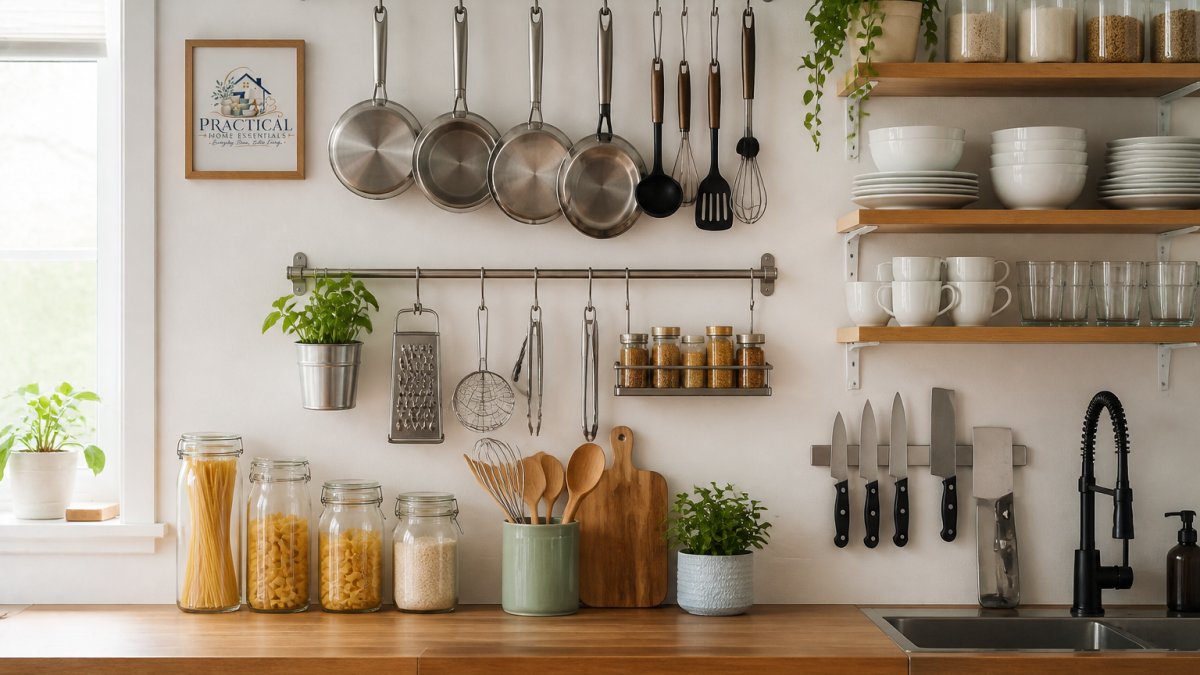
Vertical space is your greatest untapped asset in a small kitchen. Match the hardware to your wall type and layout.
Hanging Rails and Hooks
Hanging rails store frequently used items at eye level.
The Over-Cabinet Door Storage Hook at $15.00 is an affordable way to test the concept before committing to a full rail system, holding kitchen towels, lightweight bags, or small baskets.

For a fuller system, install a stainless steel rail (24-48 inches, $40-$80) 12-18 inches above your counter with S-hooks or magnetic hooks.
Common mistake: mounting rails too high or too low. Place them at shoulder height; most residential rails hold 25-40 pounds safely, don't overload with cast iron.
Matching the Mount to Your Wall
The biggest reason wall storage fails is the wrong fastener. Identify what's behind the drywall first.
- Drywall only: Use toggle bolts or molly bolts for anything heavier than a towel. Standard plastic drywall anchors hold roughly 15-20 pounds; toggle bolts and molly bolts hold 25-50 pounds depending on size. A rail holding cast iron needs anchors rated for at least 50 pounds.
- Wood studs: The safest option for heavy racks. Use a stud finder to locate the vertical framing, then drive wood screws directly into the stud. Studs are typically spaced 16 or 24 inches on center, which also tells you the maximum span a rail can bridge before it needs an extra anchor.
- Plaster or tile: Plaster crumbles under point loads, and tile cracks if you drill without a glass-and-tile bit and masking tape. For tile backsplashes, consider adhesive rails rated for the load instead of drilling.
Pegboards and Open Shelving
Pegboards offer customizable storage for small items like measuring spoons, shears, and wooden spoons. A 24-by-36-inch pegboard costs $20-$40 and holds 15-20 items, mount one vertically beside the counter in a galley kitchen.
Open shelving creates visual lightness while keeping items accessible. Install 2-3 shelves above a work area for everyday dishes, glasses, and cookbooks, not backup items, and it suits renters since floating shelves leave minimal damage.
The trade-off: everything shows, so use matching containers and arrange items intentionally.
Layout-Specific Vertical Plans
- Galley kitchen: You have two facing walls and little else. Put a rail on the wall opposite the stove for utensils and a narrow pegboard on the end wall for small tools. Keep both rails above counter height so you never lose prep space.
- L-shaped kitchen: The long leg usually has the most uninterrupted wall. Reserve it for open shelving and a pot rail; use the short leg for a pegboard or magnetic strip for knives.
- Studio apartment kitchen: Often a single wall or a closet-sized nook. Go vertical in layers: a rail at shoulder height, a shelf above it, and stackable bins on top of the cabinet if there is one. Avoid hanging anything over the only walking path.
Reach Zones and Accessibility
Storage you can't reach is just decoration. Divide your wall into three zones:
- Prime zone (shoulder to eye level): Everyday items, the things you touch daily.
- Secondary zone (above eye level to ceiling): Backup stock, seasonal items, rarely used appliances. Use a step stool, and never store heavy cast iron here.
- Low zone (below counter): Heavy items and things you don't mind bending for.
If anyone has mobility limits, keep most-used items in the prime zone and avoid overhead storage that requires climbing.
Kitchen Cabinet Organizers to Maximize Cabinet Capacity
Your cabinets likely hold only 60-70% of their potential capacity because items are stacked haphazardly. Smart organizers double what fits without adding cabinets.
Drawer Organization for Utensils and Silverware
Utensil drawers are notorious clutter zones. The Kitchen Bamboo Expandable Cutlery Utensil Drawer Organizer at $44.00 solves this by creating defined sections for forks, spoons, knives, and serving utensils. The expandable design fits drawers from 17 to 24 inches wide, so it adapts as your kitchen changes.

Drawer dividers prevent the "junk drawer" effect, so you find items faster.
Declutter first, then organize what remains.
Cabinet-Door Storage and Over-Cabinet Solutions
Cabinet doors are vertical real estate most people ignore. Mount narrow shelves or hanging organizers inside doors for spices, canned goods, or small containers, a single door holds 8-15 items.
Over-cabinet racks sit on top of existing cabinets and hold cookbooks, small appliances, or baskets, best when cabinets leave 6-12 inches above. Most hold 15-25 pounds maximum; don't overload, or they'll sag or fall.
Under-Sink Kitchen Storage and Cookware Solutions
The space under your sink often holds only a cleaning bottle and a trash can, but reorganizing it unlocks storage for pots, pans, food containers, and pantry overflow. The catch: it's the dampest, most awkward cabinet, so the solution must handle moisture and the plumbing trap.
Making the Under-Sink Zone Actually Usable
Clear everything out first. The drain trap and supply lines eat a chunk of the space, and the cabinet floor is where leaks show up first.
Surpahs over the Sink Multipurpose Roll-Up Dish Drying Rack →
- Protect the floor: A removable, waterproof liner catches drips and makes the cabinet easy to wipe out. The 4-Piece Set: Refrigerator Liners at $18.00 can be cut to fit cabinet shelves and floors, and it lifts out for cleaning.
- Work around the trap: Use a two-tier sliding organizer or a set of stackable bins that straddle the pipes rather than a single deep bin that hits the trap. Measure the clear height on each side of the trap before buying.
- Keep moisture-sensitive items out: Paper goods, bulk flour, and electronics don't belong under a sink. Reserve this zone for cleaning supplies, trash and recycling, and durable cookware that can take a little humidity.
A realistic gain: with a liner, two stackable bins, and a door-mounted rack, the same footprint holds cleaning supplies, a caddy, trash bags, and a small recycling bin, roughly tripling usable capacity without adding a cabinet.
Organizing Pots, Pans, and Bakeware
Pots and pans stack inefficiently, forcing you to pull out three items to reach one at the back. The Stainless Steel Oval Pot Rack for Kitchen Cookware Storage at $179.75 hangs from the ceiling or mounts to a wall.
For a budget approach, use tiered shelf risers inside a cabinet. These metal or plastic risers let you stack pans vertically so each piece is visible and reachable.
Bakeware, sheet pans, cake pans, muffin tins, stores efficiently in a vertical file organizer. These $10-$20 organizers keep baking sheets from sliding around and make it easy to grab one without disturbing others.
Tiered Shelves and Shelf Risers
Tiered shelves create multiple levels within a single cabinet shelf, tripling usable space. They work best for everyday dishes, cups, and containers rather than backup stock. Install them securely so they don't shift; some models have rubber feet or adhesive backing.
Measuring the Gain: A Before-and-After Checklist
Use this quick audit before and after you reorganize a cabinet or the under-sink zone:
- Count accessible items. How many things can you reach without moving another item? That number, not total items stored, is the real measure of usable capacity.
- Measure clear height and depth. Note the tallest item that fits and the deepest item that fits on each shelf. Risers and bins change both numbers.
- Time a retrieval. Pick your most-used pot or pan and time how long it takes to get it out and put it back. If it doesn't get faster, the organizer isn't earning its space.
- Check for wasted air. Look at the gap between the top of your stacked items and the shelf above. If there's more than a few inches of empty air, a riser or a stackable bin will reclaim it.
- Recheck after a week. If items have migrated back to the counter, the system is too fiddly. Simplify it.
Small Kitchen Storage Ideas for Countertop and Pantry Space
Countertops in small kitchens fill up fast. Move items off counters into organized containers that maximize pantry or cabinet space.
Stackable Storage and Food Container Organization
Clear, stackable containers transform chaotic pantries. The 24-Piece Glass Food Storage Container Bakeware Set at $111.92 gives you matched containers for flour, sugar, pasta, cereals, and dried goods that stack neatly, take less space than packaging, and show when you're running low.
Label each container with contents and expiration dates to avoid duplicates and use items before they spoil; a $15-$30 label maker pays for itself by reducing food waste.
The 4-Tier Stackable Bottle Organizer, 12 Bottles at $54.99 handles pantry overflow, oils, vinegars, sauces, and beverages. Stackable design means you can add organizers as your collection grows.

Renter-Friendly and Budget-Conscious Options
Renters need solutions that don't require permanent installation. Over-the-door organizers, adhesive shelf liners, and freestanding racks work without drilling or damaging walls.
The 4-Piece Set: Refrigerator Liners at $18.00 protects shelves and prevents spills, extending the life of your rental kitchen.
For renters moving soon, focus on portable solutions, rolling carts, stackable bins, and over-door organizers, that move with you.
Installation, Load Limits, and Safety Considerations
Wall-mounted storage requires proper installation. Anchors, brackets, and fasteners matter, a rack that falls could injure someone or damage dishes.
For drywall, use heavy-duty anchors rated for your load: a pot rack holding cast iron needs anchors rated for at least 50 pounds.
Load limits are manufacturer specifications, not suggestions. If a shelf is rated for 25 pounds, don't load it with 40 pounds of cast iron.
Measuring and Evaluating Storage Solutions for Your Layout
Before buying any organizer, measure your kitchen and identify what needs storage.
| Measurement | Why It Matters | How to Measure |
|---|---|---|
| Cabinet interior width, depth, height | Determines what fits inside | Use a tape measure; measure from inside edge to inside edge |
| Wall space above counters | Identifies room for hanging storage | Measure from counter to cabinet bottom or ceiling |
| Drawer dimensions | Ensures organizers fit without forcing | Measure length, width, and depth of each drawer |
| Distance between shelves | Limits height of items you can store | Measure from shelf bottom to shelf above |
| Wall stud locations | Required for mounting anything heavy | Use a stud finder to locate vertical supports |
Next, audit what you actually use. Small kitchens don't have room for backup appliances, duplicate utensils, or items untouched in a year.
Small kitchen storage doesn't require expensive renovations or professional design. It requires intentional choices about what you keep, where it goes, and how you access it.
Frequently Asked Questions
How can I maximize storage in a small kitchen without remodeling?
Use vertical space by installing wall-mounted racks, hooks, and open shelving. Organize your drawers with expandable organizers, add shelf risers to create layers, and use cabinet-door storage. Consider stackable containers for pantry items and under-shelf storage baskets. These solutions add storage capacity without requiring construction or permanent changes, making them ideal for renters.
What are the best small kitchen storage ideas for limited cabinet space?
Prioritize drawer organization with bamboo utensil organizers, use tiered shelf risers to double your cabinet capacity, and install over-cabinet door hooks for frequently used items. Stackable bottle organizers work well for beverages and condiments. Keep countertop space clear by storing items vertically on walls. The key is using every surface, especially walls and cabinet interiors, to maximize your available space.
How do I organize under-sink kitchen storage effectively?
Start by measuring your under-sink space to account for plumbing. Use stackable organizers and shelf risers to create vertical layers. Store cleaning supplies in stackable bins, and use pull-out drawers or baskets for easy access to items at the back. Keep frequently used items at eye level. Consider a roll-up dish drying rack that fits over your sink to free up counter and under-sink space.
What load limits should I consider when installing wall-mounted storage?
Check your wall type, drywall typically supports 10-25 pounds per anchor, while studs support 25-50 pounds depending on the fastener. Always use appropriate anchors for your wall material. Distribute weight evenly and avoid overloading a single shelf. If you're renting, use damage-free adhesive strips or tension rods rather than drilling. When in doubt, consult the manufacturer's weight specifications for each product.