

Can You Actually Recycle Old Home Decor Items?
Editorial TeamLast Updated: October 31, 2026
Quick Summary
You can recycle old home decor by sorting each item into one of four buckets: reuse it yourself, donate it, recycle the materials, or toss it as a last resort. Most items fall into the first two, since sturdy pieces can be donated and broken ones stripped for recyclable wood, metal, glass, or textiles.
- Ask what an item is made of, whether it is safe, and whether it is whole before binning it.
- Test anything made before 1978 for lead paint before sanding it yourself.
- Choose pallets stamped HT (heat-treated) rather than MB (methyl bromide) for indoor projects.
- Photograph an item before calling a charity so staff can approve or decline it fast.
- Keep a dated donation receipt; the IRS generally requires one for gifts of $250 or more.
Table of Contents
- Sorting Old Home Decor: Reuse, Donate, Recycle, or Toss
- How to Repurpose Old Furniture Without a Full Workshop
- DIY Home Decor From Recycled Materials: 6 Starter Projects
- Turning Pallets, Crates, and Jars Into Functional Furniture
- How to Donate Old Furniture and Decor That Still Has Life
- Cost and Difficulty: Which Upcycling Projects Are Worth It
- Small-Space and Renter-Friendly Ways to Recycle Old Home Decor
- Pick Your First Project and Shop the Finishing Pieces
- Frequently Asked Questions
Sorting Old Home Decor: Reuse, Donate, Recycle, or Toss
Most people stare at a broken lamp or a scuffed dresser and see one choice: the curb. That's the wrong first move.
Old decor can be sorted into four buckets: reuse it yourself, donate it, recycle the materials, or toss it as a last resort. Most items fall into the first two.
A useful rule of thumb: if it's sturdy and someone could use it, it's not trash. If it's broken but the material is valuable, recycle it.
How to Tell Whether an Old Decor Item Can Be Recycled
Ask three questions before anything goes in the bin.
- What is it made of? Wood, metal, glass, and textiles are usually recyclable or reusable. Mixed materials are harder.
- Is it safe? Cracked glass, lead paint on old furniture, and frayed wiring need special handling.
- Is it whole? A complete item can be donated. A broken one might be recycled for parts.
A quick test: pick it up. If it holds together and looks decent, clean it and donate it. If it's falling apart, strip what you can recycle and dispose of the rest.
How to Repurpose Old Furniture Without a Full Workshop
You don't need a garage full of tools to give a dresser a second life. A basic kit covers most projects:
- A cordless sander or sanding block
- A drop cloth
- Primer and paint
That's it. Start small and add only what a project actually needs.
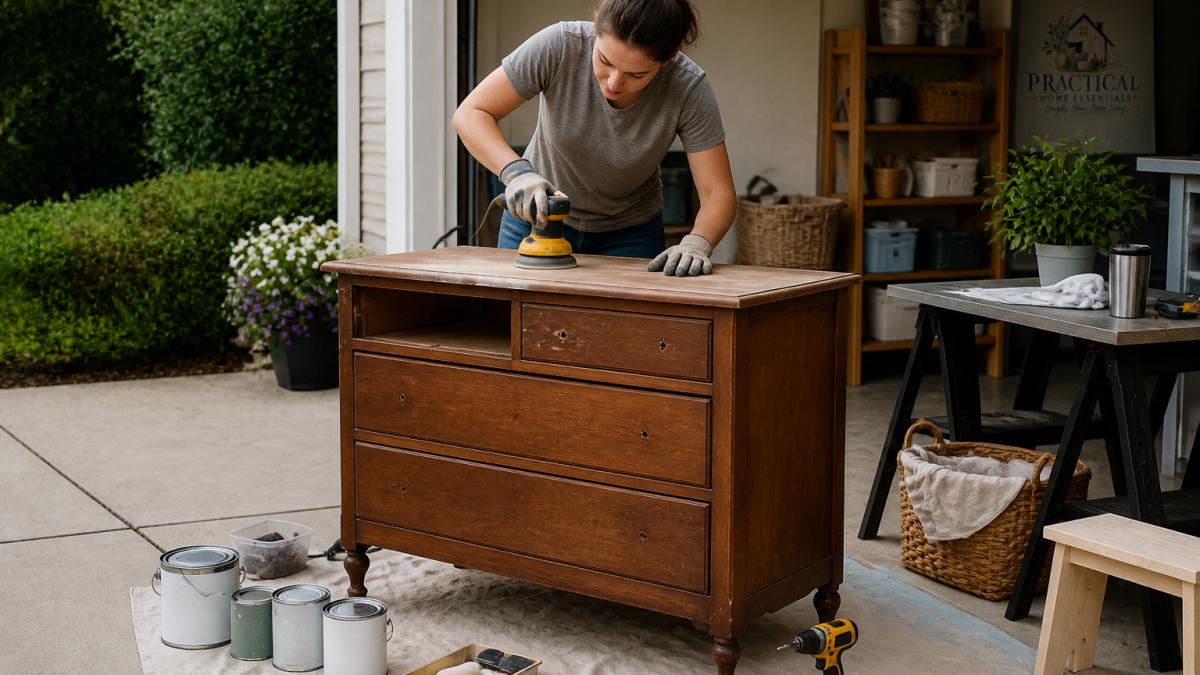
Sanding, Painting, and Refinishing a Dresser Safely
Safety matters more than speed here.
- Sand outside or in a ventilated space. Old finishes can release dust.
- Test for lead paint on anything made before 1978. Home test kits are cheap and widely sold.
- Wear a mask and eye protection. Fine dust is the enemy.
Watch out: skipping the lead test on an old piece is a common and avoidable mistake. If a kit shows lead, don't sand it yourself; seal it or hand it to a professional.
DIY Home Decor From Recycled Materials: 6 Starter Projects
These six projects use items you probably already have, and each one is scoped so a beginner can finish it in a single session. The table below gives the realistic tool list, time, skill level, and typical out-of-pocket cost for each, assuming you already own the source item. Costs are estimates for supplies only and vary by region and store.
| Project | Tools & Materials | Time | Skill Level | Typical Supply Cost |
|---|---|---|---|---|
| Mason jar lanterns | Jars, craft paint or twine, LED candle or wire | 30-45 min | Beginner | Under $10 |
| Crate bookshelf | 3-4 wooden crates, wood screws, drill, sandpaper, paint or stain | 1-2 hrs | Beginner | $15-$40 |
| Fabric cushion covers | Old textiles, sewing machine or hand needle, thread, measuring tape | 1-2 hrs | Beginner to intermediate | Under $15 |
| Pallet wall art | Heat-treated pallet, pry bar, sander, finish, hanging hardware | 2-3 hrs | Beginner | $10-$30 |
| Coffee-ground scrub jar | Clean glass jar, coffee grounds, carrier oil, label | 10 min | Beginner | Under $5 |
| Ladder blanket rack | Old wooden ladder, sandpaper, wood sealer, wall anchor or floor lean | 45-60 min | Beginner | Under $15 |
Project-by-Project Workflow
1. Mason jar lanterns. Wash jars and remove labels with warm soapy water and a little oil for adhesive residue.
**2.
3. Fabric cushion covers. Measure the cushion and add a 1-inch seam allowance on each side.
**4.
5. Coffee-ground scrub jar. Reuse a clean glass jar with a tight lid.
6. Ladder blanket rack. Sand an old wooden ladder and seal it to prevent snags.
If you'd rather start with a finished piece as inspiration, our reclaimed pallet wood hearts show what a simple pallet project can become.

Turning Pallets, Crates, and Jars Into Functional Furniture
This is where recycling gets fun. A wooden pallet becomes a coffee table. A crate becomes a kitchen island base. A jar becomes storage.
- Pallets: Check for the "HT" stamp, which means heat-treated and safer for indoor use. Avoid pallets with chemical treatments.
- Crates: Sand rough edges, then paint or stain to match your room.
- Jars: Remove labels, wash well, and use for pantry storage or small decor.
A pallet flag is a popular project because it's forgiving and looks great on a porch or living room wall. Our USA pallet wood flags are a ready-made example if you want the look without the build.

How to Donate Old Furniture and Decor That Still Has Life
Donation is the fastest way to keep good decor out of a landfill, but the deciding factor is almost never the item's style, it's the material and condition rules the receiving organization follows. A five-minute phone call or a check of the charity's donation page can save a wasted trip.
What Most Donation Centers Accept vs. Refuse
Acceptance varies by organization, but a common pattern across national thrift chains and local charities is:
- Usually accepted: solid wood furniture in usable condition, metal frames, glassware without chips or cracks, framed art, lamps with intact wiring, textiles that are clean and odor-free, and small decor in original or sturdy packaging.
- Often refused: upholstered furniture with tears, stains, pet odor, or missing cushions; mattresses and box springs (many states regulate their resale); cribs and car seats that predate current safety standards; items with peeling lead paint; and anything with frayed wiring or a cracked glass shade.
- Case by case: large appliances, pianos, and built-in cabinetry, call first, because many charities now decline these due to hauling cost.
Preparing an Item So It Actually Gets Accepted
A wiped-down piece gets accepted more often than a dusty one, and a few minutes of prep raises the odds further:
- Dust and degrease with a damp cloth and a mild cleaner; avoid soaking wood or veneer.
- Tighten or bag loose hardware, screws, shelf pins, and knobs in a zip bag taped to the underside.
- Remove personalization such as name decals or monograms when it's easy to do without damage.
- Test lamps and small electronics before donating; a working lamp is accepted, a dead one usually isn't.
- Fold or wrap textiles so they arrive clean and dry.
Scheduling Pickup and Getting a Receipt
- Pickup vs. drop-off: national organizations such as Goodwill and The Salvation Army operate drop-off locations in most metros, and some schedule free pickup for large furniture; local charities and furniture banks often pick up larger loads. Confirm the pickup window and whether the driver will enter the home or curbside only.
- Receipt mechanics: ask for a dated receipt listing the items donated. For itemized deductions, the IRS generally requires a receipt for any single donation of $250 or more and Form 8283 for noncash contributions over $500; for smaller amounts, a receipt plus your own record of fair market value is the common practice (Topic no. 506, Charitable contributions). Fair market value is what the item would sell for used, not its original retail price.
- Document condition: photograph items on the day of donation and keep the photos with the receipt.
When Donation Isn't the Right Answer
If an item is refused because of safety or condition, don't force it on a charity. Move to the next option in the sorting order: strip recyclable materials (metal frames, glass, clean textiles) and dispose of the rest through your municipal bulk-waste program. A broken upholstered chair, for example, is usually a bulk-pickup item, not a donation.
Cost and Difficulty: Which Upcycling Projects Are Worth It
Not every project earns its keep. Here's how we'd rank the common ones.
| Project | Difficulty | Typical Cost | Worth It? |
|---|---|---|---|
| Mason jar lanterns | Easy | Low | Yes, quick win |
| Crate bookshelf | Easy | Low | Yes, great for small spaces |
| Dresser refinish | Medium | Medium | Yes, big visual payoff |
| Pallet coffee table | Medium | Medium | Yes, if you have tools |
| Upholstery repair | Hard | High | Only for quality pieces |
| Full furniture rebuild | Hard | High | Rarely worth it |
If you're weighing a bigger purchase against a DIY fix, our guide on whether multifunctional furniture is worth it helps you compare the trade-offs before you spend.
Small-Space and Renter-Friendly Ways to Recycle Old Home Decor
Renters face a real limit: no drilling, no permanent changes. The good news is most recycling projects are removable.
- Use command strips and tension rods instead of nails.
- Choose freestanding shelves over wall-mounted ones.
- Reuse jars and crates as stackable storage that moves with you.
For kitchen updates you can undo, our guide on renter-friendly kitchen upgrades covers damage-free options that pair well with reused decor.
Pick Your First Project and Shop the Finishing Pieces
Start with one small project this weekend. A jar lantern or a crate shelf takes an afternoon and teaches you the workflow: sort, prep, build, finish.
Once your space feels refreshed, choosing decor that actually fits takes a little know-how. Our guide on how to choose functional decor for a stylish living space walks through matching pieces to your room and your routine.
Frequently Asked Questions
Can you recycle old furniture, or does it have to go to the trash?
Most old furniture can avoid the landfill, but rarely through a curbside bin. Solid wood pieces can be sanded, painted, and reused, or broken down and taken to a municipal yard waste or wood recycling site. Metal frames and hardware go to scrap metal recyclers. Upholstered items in decent condition are better donated than recycled, since mixed fabric and foam are hard to separate. Check your city's waste department rules before setting anything at the curb, because bulky item pickup often requires a scheduled appointment.
What are the easiest DIY home decor from recycled materials projects for a beginner?
Start with projects that need no power tools. A mason jar becomes a utensil holder or planter with a coat of paint. An old ladder turns into a blanket rack or shelf. A wooden crate flipped on its side makes a bookshelf or shoe storage. Cushion covers can be sewn from old curtains or tablecloths if you have a machine.
How do you donate old furniture when you have no truck?
Call ahead to confirm the donation center accepts furniture and ask about pickup. Many charity thrift stores schedule free home pickups for large items, though the wait can run one to three weeks. If pickup is not available, rent a cargo van for a few hours or ask a neighbor with a truck. Clean the piece, photograph it, and list it on a local giveaway group as a backup. Never leave furniture outside a donation bin, since most centers treat that as dumping.
Is it worth refinishing old decor, or should I just buy new?
Refinishing wins when the piece is solid wood, has good joints, and fits your space. A dresser makeover can cost far less than a comparable new piece. Skip it if the item is particleboard with peeling veneer, has water damage or musty smells, or wobbles at the joints. Those problems cost more to fix than the piece is worth, and a donation or recycling center is the better exit.
The hardest part of recycling old home decor isn't the work. It's deciding where to start. PracticalHomeEssentials.com makes the finishing touches easy, with a curated selection of decor and storage, home delivery, and free shipping available. Browse the collection, choose options that fit your space, and turn one old piece into something you'll actually keep.
