

Is a Memory Foam Mattress Topper Worth It for Apartments?
Editorial TeamTable of Contents
- Should You Buy a Memory Foam Mattress Topper for Your Apartment?
- Memory Foam Mattress Topper Pros and Cons
- Mattress Topper vs. New Mattress: What Makes Sense for Renters
- Memory Foam Mattress Topper Thickness: Finding the Right Depth
- How Long to Let a Memory Foam Topper Expand Before Using
- Apartment-Specific Considerations: Storage, Moving, and Fit
- When a Topper Won't Solve Your Mattress Problem
- Frequently Asked Questions
Last Updated: October 10, 2026
Should You Buy a Memory Foam Mattress Topper for Your Apartment?
A memory foam mattress topper can transform an uncomfortable mattress into a more supportive sleep surface without the cost or hassle of replacing it. For apartment dwellers, this matters. You're renting, you might move in six months, and dropping $1,000 on a new mattress doesn't make financial sense. A memory foam mattress topper offers pressure relief and body contouring at a fraction of that price, and it moves with you when you leave.
But a topper isn't always the answer, sometimes it masks a deeper problem. The difference comes down to your specific situation.
A memory foam mattress topper is worth considering if your mattress is too firm, if you need pressure relief, or if you're waiting out a lease before upgrading. It's not worth it if your mattress is sagging, broken, or too worn to save.
Let's break down when a topper makes sense and when you're better off exploring other options.
Memory Foam Mattress Topper Pros and Cons
Memory foam toppers add a comfortable cushioning layer to structurally sound mattresses. The material conforms to your body, distributing weight evenly and reducing pressure on shoulders, hips, and lower back.
Pros:
- Adds comfort without replacing the entire mattress
- Portable and easy to move between apartments
- Relatively affordable compared to a new mattress
- Works well for side sleepers and people with pressure point pain
- Can extend the life of a mattress that's still supportive but uncomfortable
- Takes up minimal storage space when rolled
Cons:
- Cannot fix a mattress that's already sagging or losing support
- May trap heat, making some sleepers feel clammy
- Requires proper off-gassing time before use (typically 24-48 hours)
- Can shift or bunch under fitted sheets if not secured properly
- Adds thickness, which may not fit well with low-profile bed frames
- Durability varies; cheaper toppers may compress or sag after 2-3 years
- Not ideal for hot sleepers unless you choose a cooling-gel or latex option
Mattress Topper vs. New Mattress: What Makes Sense for Renters
For renters, a new mattress is a long-term investment you may not keep. A memory foam mattress topper is temporary, you use it for your lease, roll it up when you move, and take it with you. If it doesn't work, you've spent far less than a mattress.
Here's the practical breakdown:
Choose a topper if:
- Your mattress is still supportive but uncomfortable
- You're in your apartment for fewer than three years
- You want to test whether memory foam actually works for you before committing to a new mattress
- You need pressure relief but your mattress foundation is solid
- You're on a tight budget and can't afford a full replacement
Choose a new mattress if:
- Your current mattress is visibly sagging or has lost support
- You plan to stay in your apartment for five years or longer
- Your mattress is making pain worse, not just uncomfortable
- You're willing to invest in something you'll use for years
- The underlying problem is the mattress itself, not just the comfort layer
For most apartment dwellers, a topper makes more sense. You're not locked into it, and if you move, you can adjust or replace it cheaply.
Memory Foam Mattress Topper Thickness: Finding the Right Depth
Thickness determines cushioning, feel, and fit. The right choice depends on mattress firmness, sleep position, and bed frame height.
Measuring mattress firmness before you buy: Assess your current mattress by lying on it and noting firmness (very firm, moderately firm, or soft). Check the mattress tag for a firmness rating if available. This baseline matters because a topper only adds a comfort layer, it doesn't change underlying support.
Two-inch topper (the most common choice): A two-inch topper adds noticeable cushioning without destabilizing the mattress. It works best for moderately firm but uncomfortable mattresses, softens the sleep surface while preserving support, and fits under standard fitted sheets without bunching.
Three-inch topper (maximum contouring): Thicker toppers suit side sleepers, heavier people, and those with significant pressure point pain.
One-inch topper (minimal intervention): Choose one inch if your mattress is fairly comfortable but needs slight softening, or to test memory foam before committing to thicker options. One-inch toppers fit under fitted sheets easily, take minimal storage space, and are affordable. Downside: minimal pressure relief for firm mattresses or significant pain.
Apartment bed frame compatibility: Measure your bed frame height (standard: 12-16 inches; platform: 8-12 inches) and mattress thickness (typically 8-12 inches). A two-inch topper adds 2-3 inches total. If your frame is already high, a two-inch topper may be too tall for fitted sheets or easy entry.
Sleep position and body weight: Side sleepers benefit from thicker toppers (2-3 inches); back sleepers do well with two inches. Stomach sleepers prefer one inch or skip memory foam to avoid spinal misalignment. Heavier sleepers (over 230 pounds) may need three inches to avoid excessive compression.
The practical rule: Start with two inches unless you have a low-profile frame, very firm mattress, or minimal pressure point pain. Two inches balances cushioning, standard bedding fit, and frame compatibility.
How Long to Let a Memory Foam Topper Expand Before Using
Memory foam is compressed during manufacturing and shipping. When it arrives, it needs time to expand and release volatile organic compounds (VOCs), a process called off-gassing. For apartment dwellers, this matters more because you have less space to ventilate.
Standard expansion timeline: Wait 24-48 hours before using your topper. Using it before full expansion traps gases, creating a stronger smell that lingers for weeks. Forty-eight hours is safer; 24 hours is the minimum.
Why apartments make off-gassing harder: Apartment bedrooms are smaller and more enclosed. Poor ventilation, sealed windows, and shared walls mean odors linger longer and concentrate more intensely. Central air may recirculate the smell throughout your unit or affect neighbors.
Practical off-gassing steps for apartments:
-
Unroll in the most ventilated space available. If you have a balcony, patio, or fire escape, unroll the topper there for the first 12-24 hours. If not, unroll it in your bedroom with windows open as wide as possible.
-
Remove all plastic wrapping immediately. The plastic traps gases. Take off the shipping bag, the plastic cover, and any plastic sheets inside the roll as soon as it arrives.
-
Use fans to move air. Place a box fan or portable fan near the topper, pointed toward an open window. This pushes odors out instead of letting them settle in your room. A ceiling fan also helps, though it's less effective than a directional fan.
-
Open windows for at least 48 hours. Even in cold weather, crack a window to create airflow. If you're worried about heating costs, open the window in a room you're not using, or open it just enough to create a small draft.
-
Consider a second space if possible. If you have a living room, hallway, or spare room, unroll the topper there instead of your bedroom. This keeps the smell out of your sleeping space while it off-gasses. Move it to your bed after 48 hours.
-
Use activated charcoal or baking soda. Place open boxes of baking soda or activated charcoal near the topper while it expands. These absorb odors without adding chemicals. Replace them every 12 hours for the first 48 hours.
-
Run an air purifier if you have one. A HEPA air purifier with activated charcoal filters can reduce off-gassing odors in a closed room. Run it continuously during the expansion period.
How long the smell actually lasts: Most people report the chemical smell fades within 3-7 days with good ventilation. Budget-friendly toppers off-gas more noticeably than premium brands. If smell persists beyond a week, the topper wasn't fully expanded or your room lacks airflow.
If you're sensitive to odors: If you have asthma or chemical sensitivities, unroll the topper outside or in a garage for 48 hours, then air it in your bedroom with windows open and fans running. Consider latex or hybrid toppers instead, as they off-gas less noticeably.
Apartment-specific timing tip: Order your topper to arrive before move-in. Unroll it in your old place while it off-gasses, then move it to your new bedroom already expanded and mostly odor-free.
Apartment-Specific Considerations: Storage, Moving, and Fit
Apartment living introduces storage, moving, and bed frame constraints. A rolled topper takes far less space than a mattress and stores under a bed, in a closet, or behind a door. When moving, rolling it up takes minutes, far easier than hauling a mattress. Toppers are portable and require no special equipment.
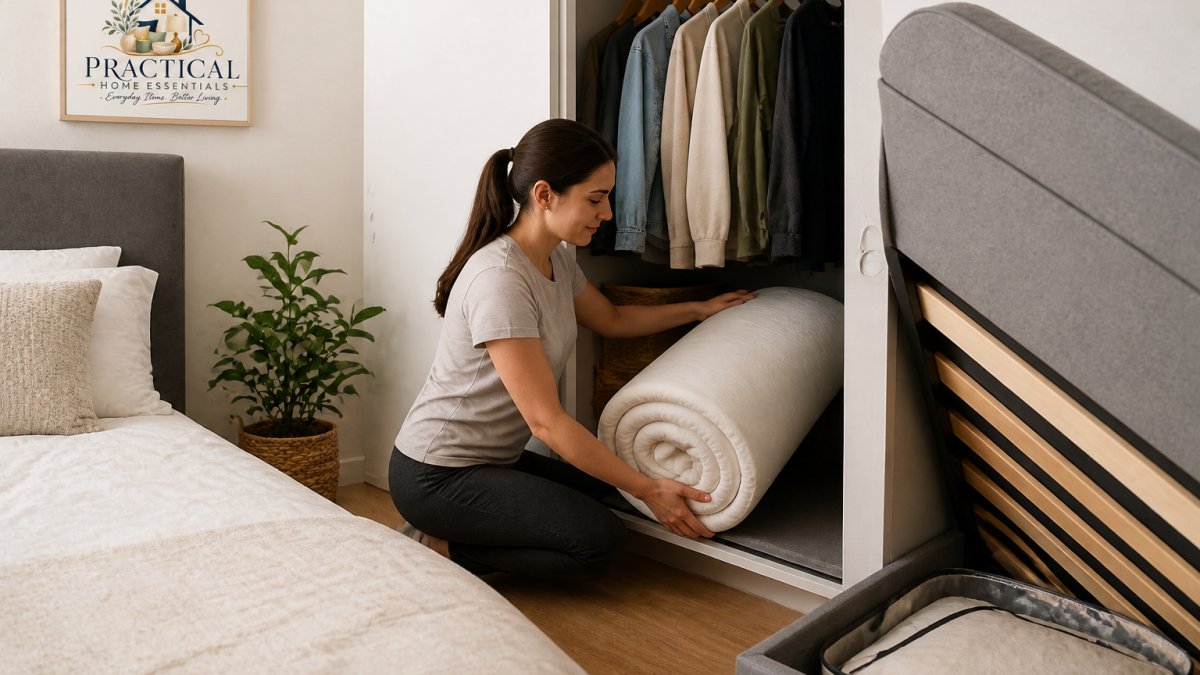
Bed frame fit: Measure your bed frame height and mattress thickness before buying. A topper adds 2-3 inches. If your setup is tight, choose a thinner or low-profile option.
Mattress size compatibility: Order the correct size (twin, full, queen, king). An undersized topper will shift; an oversized one wastes material.
Apartment temperature and humidity: If your apartment runs warm, consider a cooling-gel or latex topper instead of standard memory foam to prevent clammy feeling.
When a Topper Won't Solve Your Mattress Problem
Not every mattress problem is fixable with a topper. Knowing the difference saves you money and frustration.
A topper cannot fix a mattress that's already sagging. If your mattress has visible dips or valleys, or if you sink unevenly into it, the problem is the internal structure. A topper sits on top of that broken structure. You'll still sink, and the topper won't provide the support you need.
A topper won't help if your mattress is too soft. If your mattress already feels like you're sinking into a cloud and you need more support, adding another cushioning layer makes it worse. You need a firmer mattress, not a softer topper.
A topper won't solve allergies or dust mite problems. If you're reacting to your mattress because of dust mites or mold, a topper covers the problem but doesn't solve it. You need to replace the mattress or use a protective encasement underneath the topper.
A topper won't last forever. If your mattress is already 10+ years old and showing signs of wear, you're better off replacing it than extending its life with a topper.
The honest assessment: if your mattress is structurally broken, a topper is a band-aid. If it's just uncomfortable, a topper is a smart solution.
A memory foam mattress topper is worth it for apartments when your mattress is uncomfortable but still supportive, when you're renting short-term, or when you want to test whether memory foam works for you before investing in a full mattress replacement.
PracticalHomeEssentials.com offers a curated selection of quality bedding and toppers designed for apartment living. We understand the constraints of renting, the need for portability, and the importance of getting comfort right without overcommitting. Browse our collection of memory foam mattress toppers and find the thickness, firmness, and features that match your space and budget.
Frequently Asked Questions
Can a memory foam mattress topper really make an old mattress feel better?
Yes, a memory foam topper can improve comfort by adding cushioning and pressure relief on a worn mattress. However, if your mattress has deep sagging, broken springs, or structural damage, a topper is only a temporary fix. Toppers work best on mattresses that are uncomfortable but structurally sound. For apartments where you're renting, a topper offers an affordable way to extend your mattress life without replacing it.
What happens if you don't wait 48 hours for memory foam to expand?
Memory foam needs time to fully expand and reach its intended firmness and support. Using a topper before it's fully expanded can compress it unevenly and prevent it from conforming properly to your body. Most manufacturers recommend waiting 24-48 hours after unboxing. Waiting the full time ensures the foam reaches its designed density, providing the comfort and pressure relief you paid for.
Does a memory foam topper make a bed hotter?
Memory foam retains heat more than traditional materials, which can create a clammy feel for hot sleepers. However, many modern toppers include cooling technologies like gel infusions or open-cell foam to improve breathability. If you sleep hot, look for toppers specifically marketed as cooling. In apartments with temperature control challenges, this matters more, consider your room's climate and your sleeping style before choosing.
Is a mattress topper easier to move than a mattress?
Yes, significantly. A topper rolls up compactly and weighs far less than a full mattress, making it ideal for apartments where you might move every year or two. A queen mattress is bulky and difficult to navigate through hallways and stairwells. If you're renting or expect to relocate soon, a topper's portability is a major advantage, you can take it with you or store it easily in a closet.