

Store Seasonal Clothes in Small Apartments
Editorial TeamLast Updated: October 23, 2026
Quick Summary
To store seasonal clothes in small apartments, declutter first, sort by season and type, use accordion folding for upright storage, and assign off-season items to secondary locations like under-bed bins or closet shelves based on access frequency and humidity levels.
- Removing 30% of your wardrobe through decluttering can cut storage needs in half.
- Accordion folding saves 20-30% more space than rolling clothes in bin storage.
- Keep only current-season clothes in your closet; move off-season items to secondary storage to free up 40-50% of closet space.
- Under-bed storage works best for clothes you won't need for 3-6 months in stable temperature and humidity conditions.
- Label containers on two sides with season, contents, location, and date stored to maintain an organized rotation system.
Table of Contents
- Declutter and Purge Before Storing Seasonal Clothes
- Sort and Separate Clothing by Season and Type
- Master Strategic Folding and Upright Storage Methods
- Small Closet Storage Ideas for Year-Round Access
- Under-Bed Clothing Storage and Secondary Storage Locations
- Vacuum Storage Bags for Clothes and Container Selection
- How to Store Clothes in Humid Areas and Protect Garments
- Create a Seasonal Rotation System and Label Everything
- Frequently Asked Questions
Declutter and Purge Before Storing Seasonal Clothes
Before you store seasonal clothes, pare down what you keep. It's the hardest step but saves the most space.
Ask of each piece: Do I wear this? Does it fit? Is it in good condition? If any answer is no, donate or sell it.
A common mistake is keeping clothes "just in case." That sweater unworn for three years is taking up valuable real estate. People who declutter first often end up with storage systems that actually work, because they're not cramming in dead weight.
Here's what to do:
- Try on questionable items; if they don't fit or feel good, remove them
- Check for stains, tears, or fading you missed before
- Be honest about style changes
Once you've purged, you'll have a realistic inventory, which makes the rest of the process easier.
Sort and Separate Clothing by Season and Type
Now organize what's left: split warm-weather clothes (spring/summer) from cold-weather clothes (fall/winter), then break each season into tops, bottoms, dresses, and outerwear. This makes rotation simple and shows what you actually have. When you store seasonal clothes in small apartments, type-based sorting lets you grab exactly what you need without unpacking everything.
Sorting strategy:
- Create four piles: spring, summer, fall, winter
- Within each pile, sort by type: shirts, pants, dresses, jackets, underwear
- Keep year-round items (jeans, cardigans) easily accessible
This step takes an hour but saves hours of digging through three bins for one sweater.
Master Strategic Folding and Upright Storage Methods
How you fold matters: the wrong method wastes space, the right one can double what fits in a bin.
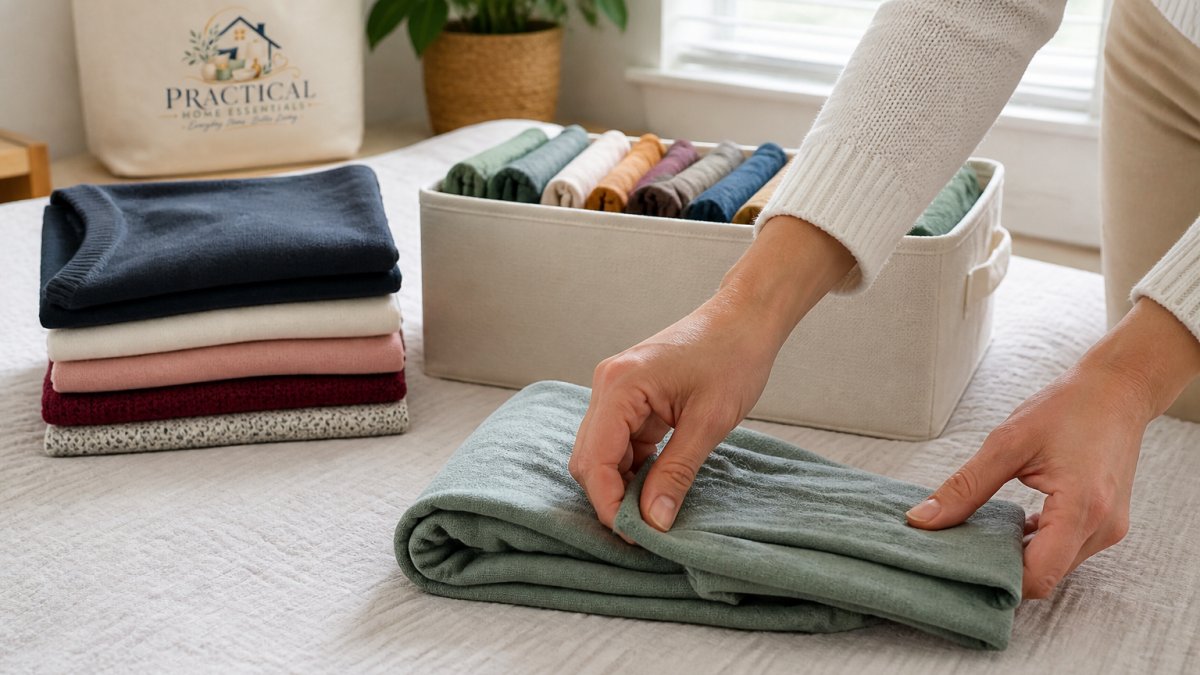
Accordion folding (file folding) is the game-changer for small-space storage.
Upright storage works best for:
- T-shirts and casual tops
- Lightweight sweaters
- Pants (fold in half, then accordion)
For bulkier items like winter coats or thick sweaters, traditional flat stacking works better, but keep them in a separate bin so they don't crush lighter pieces.
Consistency is key: if everyone folds the same way, the system stays organized; mixed methods bring chaos back fast.
How Long Organize Small Closet Timeline explains realistic timelines for implementing these methods, so you're not overwhelmed by the project.
Small Closet Storage Ideas for Year-Round Access
Small closets force you to be strategic about what stays accessible versus what gets stored away.
Keep only current-season clothes in your closet; off-season items move to secondary storage.
For year-round access, use double hangers (cascading hangers) to stack two items vertically on one rod, doubling hanging capacity. Thin items like t-shirts and light sweaters work well; avoid heavy jackets or thick knits, which slip.
Maximize closet space:
- Remove everything that's not current-season
- Use slim hangers instead of bulky plastic ones (saves 30% width)
- Install a second rod if you have vertical space
Small Bedroom Storage Solutions Adults Review and Home Organization Systems For Small Living Rooms offer deeper strategies for making small closets work harder.
The goal is simple: keep your closet functional for today's season and send everything else to storage, so it doesn't become a dumping ground.
Under-Bed Clothing Storage and Secondary Storage Locations
Under-bed space is the most underused real estate in a small apartment, but not every secondary location is equal. You can organize and store seasonal clothes with a Murphy Laundry Storage Bin. Before assigning a bin, compare spots on four things: access frequency, temperature and humidity stability, weight capacity, and visibility. That comparison separates a system that lasts from one you abandon by December.
Compare the realistic locations
Under the bed
- Access: easy, if bins slide and are labeled on the side
- Temperature and humidity: stable, close to room conditions, generally the safest spot
- Weight: fine for folded clothes, but don't overload soft-sided bins or they won't slide
Top shelf of the closet
- Access: hard, requires a step stool, reserve it for once-a-season items
- Temperature and humidity: warmer and drier near the ceiling, good for wool, bad for heat-sensitive items
- Weight: keep bins light and avoid stacking heavy bins on one shelf
Entryway closet
- Access: very easy, which makes it tempting to overload
- Temperature and humidity: fluctuates with the door and outdoor air, the worst spot for wool and natural fibers
- Weight: usually shallow, so use slim bins and hanging organizers
Behind a door or in a corner with a garment rack
- Access: easy
- Temperature and humidity: room conditions, but dust accumulates faster on open racks
- Weight: limited by the rack, heavy coats on the ends, light items in the middle
Under a couch or ottoman
- Access: moderate, depends on furniture height
- Temperature and humidity: close to floor level, cooler and slightly damper
- Weight: low, so use flat bins and avoid stacking
Bathroom or kitchen storage
- Access: easy but usually already full
- Temperature and humidity: high humidity in bathrooms, high heat and grease in kitchens, both bad for fabric
- Weight: not designed for clothing
The constraints that decide the assignment
- Humidity: floor-level and exterior-wall spots run damper. Keep wool, leather, and silk away from them and add a moisture absorber to any bin in those locations.
- Temperature swings: entryways and spots near exterior doors fluctuate most. Reserve them for hardy items like outerwear and shoes.
- Weight: never stack heavy bins more than two high on a closet shelf, and keep soft fabric bins on the bottom of any stack.
Studio-specific moves
In a studio, hide storage without blocking light or walkways. A garment rack behind a curtain keeps current-season clothes accessible while hiding clutter. A bed with built-in drawers replaces the under-bed bin stack. A dresser used as a nightstand doubles its function. Assign each storage zone one job and don't let it drift into a catch-all.
HUD guidance on home moisture and ventilation
Vacuum Storage Bags for Clothes and Container Selection
Vacuum-sealed bags compress clothes to roughly one-third their size, which is why they appear in almost every small-space storage list. But the container choice isn't one-size-fits-all: it depends on fabric, garment structure, storage duration, and the dimensions of your spot. Get the match wrong and you either waste space or damage clothes you meant to protect.
Match the container to the garment, not the other way around
Vacuum bags work best for:
- Bulky down and synthetic-fill items such as puffer coats, ski jackets, and comforters, which rebound after unpacking
- Thick acrylic or synthetic sweaters that won't crease permanently
- Bedding and linens stored for a full off-season
Keep out of vacuum bags:
- Wool, cashmere, silk, and other natural protein fibers, which can develop permanent creases and lose loft under sustained compression
- Structured garments such as blazers, tailored coats, and dresses with boning or padding, which can distort
- Down-filled items sealed for more than a season, since prolonged compression can reduce loft
Breathable fabric or canvas bins work best for:
- Knits and sweaters, which need airflow to avoid musty odors
- Wool items stored with cedar or lavender
- Everyday folded clothes in a bedroom or closet
Clear rigid plastic bins work best for:
- Structured items that need to hold their shape
- Shoes and accessories
- Anything stored under a bed where dust and occasional moisture are concerns
Hanging garment bags work best for:
- Coats, blazers, and dresses that shouldn't be folded
- Delicate fabrics that need to hang free
- Transitional pieces you'll pull out mid-season
Sizing and dimension rules that prevent wasted space
Measure the storage location before buying anything. Under-bed clearance is usually 6-10 inches, so 6-8 inch flat bins fit most beds; deeper bins won't slide under. Closet shelf depth is typically 12-16 inches, so 12-inch-footprint stackable bins fit cleanly.
Reverse the common pattern of buying containers first: measure the location's height, width, and depth, then buy containers leaving an inch of clearance on each side so you can pull them out.
The trade-offs nobody lists
- Vacuum bags can puncture on bed-frame hardware or bin corners; wrap the bag in a pillowcase or place it inside a rigid bin if the storage spot has sharp edges
- Bags that lose their seal quietly re-inflate and take up more space than when you started; check the seal at each rotation
- Clear bins yellow and crack over time in sunlight; keep them out of direct sun
EPA guidance on indoor humidity and mold
How to Store Clothes in Humid Areas and Protect Garments
Humidity is the enemy of stored clothes, causing mold, mildew, musty smells, and fabric breakdown.
Prevention steps:
- Store clothes in a cool, dry location (not a basement or bathroom)
- Use moisture absorbers like silica gel packets or activated charcoal
- Ensure containers have tight-fitting lids
Before storing clothes, make sure they're completely clean and dry, since any moisture or residue encourages mold.
For natural fabrics like cotton, linen, and wool, add cedar blocks or lavender sachets to storage containers.
Check stored clothes every 2-3 months, especially in humid climates: open containers, let air circulate, and rotate items to prevent moisture buildup.
Create a Seasonal Rotation System and Label Everything
The final step is a rotation system you'll actually follow.
Step 1: Set rotation dates. Pick specific dates when you'll swap seasonal clothes (e.g., March 1 for spring, September 1 for fall).
Step 2: Label everything clearly. Use labels that include:
- Season (Spring 2026, Winter 2025)
- Contents (Summer Dresses, Winter Coats)
- Storage location (Under Bed, Closet Shelf)
Step 4: Rotate on schedule. When your rotation date arrives, pull out the next season's bin and pack away the current one.
Step 5: Check stored items. Before putting clothes away for 6 months, inspect them for damage, stains, or odors. Fix small issues now rather than discovering problems months later.
A simple spreadsheet works too:
| Bin | Season | Contents | Location | Stored Date |
|---|---|---|---|---|
| 1 | Summer 2026 | Dresses, shorts, light tops | Under bed | May 1, 2026 |
| 2 | Winter 2025 | Coats, sweaters, heavy pants | Closet shelf | October 1, 2025 |
| 3 | Spring 2026 | Cardigans, light jackets | Hallway rack | March 1, 2026 |
This system takes 15 minutes to set up and saves hours of frustration.
Storing seasonal clothes in small apartments doesn't require expensive systems or complicated methods.
Frequently Asked Questions
How do you store seasonal clothes in a small apartment without taking up too much space?
Start by purging items you don't wear, then fold clothes using the upright method to maximize vertical space in bins. Use clear storage containers so you can see contents without opening them, and store off-season items under the bed, in closet shelves, or in an entryway storage area. Vacuum-sealed bags compress bulky items like winter coats by up to 80%, freeing significant closet space. Label everything by season and year for quick retrieval during rotation.
Should you use vacuum storage bags to store seasonal clothes?
Vacuum storage bags work well for bulky off-season items like winter coats, comforters, and sweaters, reducing their volume significantly. However, they're less ideal for delicate fabrics or items you'll need to access frequently. For small apartments, vacuum bags are excellent for maximizing under-bed and shelf storage. Always ensure clothes are completely dry before sealing to prevent mold and moisture issues, especially in humid climates.
How do you store clothes in humid areas without mold or odor?
In humid climates, use breathable storage containers like canvas bins or plastic cubbies rather than airtight boxes, which trap moisture. Place silica gel packets or activated charcoal inside containers to absorb excess humidity. Store clothes in a cool, dry location away from exterior walls where condensation forms. Ensure garments are completely dry before packing, and avoid storing in basements or near windows. Periodically open containers to allow air circulation.
What's the best way to organize a small wardrobe in a studio apartment?
Maximize closet space with double hangers and drop-down hangers to double your hanging capacity. Use shelf dividers to stack folded items neatly. For off-season clothes, use under-bed storage boxes or a clothing rack in an entryway or corner. Sort by clothing type first, then by season. Keep frequently worn items at eye level and arm's reach. Consider a dresser or storage bench at the foot of your bed for additional drawer space without taking up extra floor area.
