

How to Organize Small Apartment Storage: 2026 Guide
Table of Contents
- What You'll Need Before You Start Organizing
- Decluttering Tips for Small Apartments: Purge First, Organize Second
- Vertical Storage Solutions for Apartments: Floor-to-Ceiling Strategies
- Multi-Functional Furniture for Apartments That Double Your Storage
- How to Organize Small Apartment Storage Room by Room
- Labeling Systems and Storage Containers That Keep Small Apartment Storage Clutter-Free
- Budget-Specific Storage Tiers: Organizing at Every Price Point
- Conclusion
Last Updated: August 19, 2026
Small apartment storage feels impossible until you have a real system, then it feels obvious. This guide covers decluttering strategies, rental-friendly vertical storage, and budget-specific solutions that work in tight square footage.
The biggest mistake most people make: they buy organizers before dealing with what they own. Organization products cannot fix excess stuff. The sequence matters: purge first, then organize, then optimize.
What You'll Need Before You Start Organizing
Gather trash bags, donation boxes, a label maker or masking tape and marker, and measuring tape. Knowing your actual dimensions prevents buying storage that doesn't fit.
Decide upfront: Are you renting (which walls can you drill into)? What's your budget? Which rooms cause the most friction daily? Start there.
Small apartment storage works best when planned rather than reactive. Identify dead zones, under the bed, back of closet shelves, above the refrigerator, and treat them as untapped storage real estate.
Decluttering Tips for Small Apartments: Purge First, Organize Second
You cannot organize your way out of too much stuff. In a small apartment, every item competes for limited square footage. The National Association of Professional Organizers' research on clutter and decision fatigue shows the harder part of organizing is deciding what deserves a home at all.
The One-Year Rule and Seasonal Rotation System
If you haven't used something in twelve months, it leaves. No exceptions for "I might need it someday." Pair this with seasonal rotation: store bulky winter coats, holiday decor, and off-season bedding in vacuum-seal bags under the bed or labeled bins on high shelves, then rotate when seasons change.
| Season | Items to Store Away | Items to Bring Forward |
|---|---|---|
| Spring | Heavy coats, wool blankets, snow boots | Lightweight layers, rain gear |
| Summer | Sweaters, thermal underlayers | Shorts, sandals, fans |
| Fall | Swimwear, summer linens | Transitional layers, extra blankets |
| Winter | Summer clothing, outdoor gear | Heavy coats, holiday decor |
The Psychology of Letting Go in a Small Space
Every item you keep is a decision to prioritize that object over open space and mental calm. According to UCLA's Center on Everyday Lives and Families research on home clutter and stress, household clutter is directly linked to elevated cortisol levels. Think of your apartment's square footage as a finite resource. Keeping rarely-used items isn't neutral, it's an active choice to spend that square footage on them.
Vertical Storage Solutions for Apartments: Floor-to-Ceiling Strategies
Most small apartments dramatically underuse vertical space. The floor plan is fixed; the ceiling is not. Floor-to-ceiling storage can effectively multiply usable storage without adding square footage.
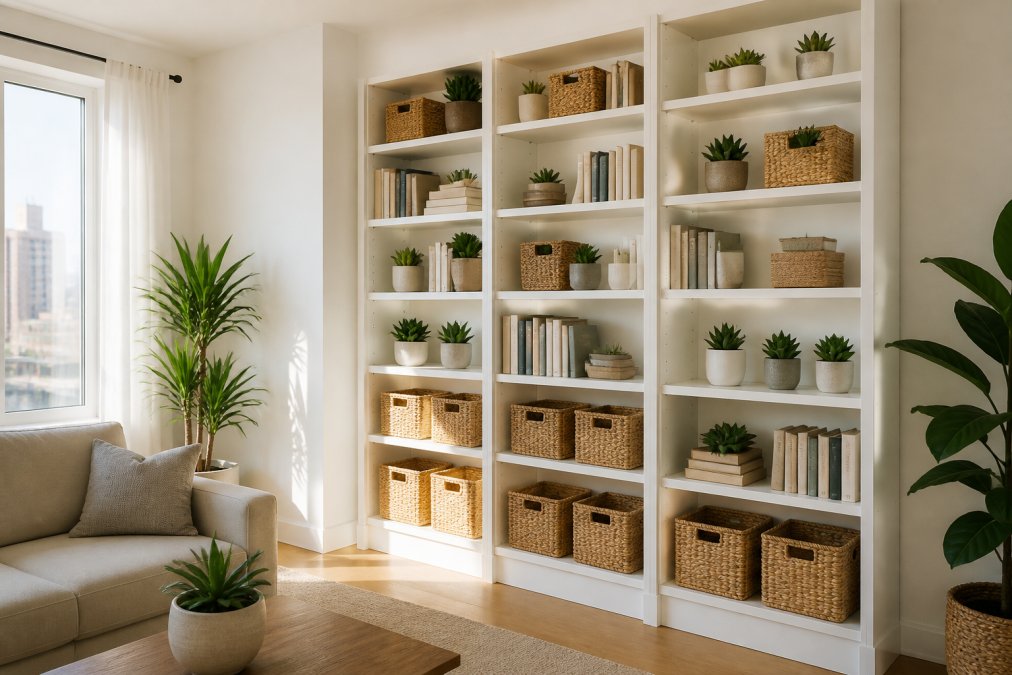
Treat every wall as potential storage from floor to ceiling. Upper shelves are ideal for infrequently accessed items: seasonal decor, spare linens, rarely used appliances.
Wall-Mounted Shelves and Over-the-Door Organizers
Wall-mounted shelves are the highest-impact vertical storage solution. Floating shelves above a desk, sofa, or bed add meaningful storage without consuming floor space. Open shelving keeps items visible and accessible.
Over-the-door organizers are equally effective and often overlooked. The back of every door, bathroom, closet, pantry, bedroom, is usable storage. Shoe organizers can hold cleaning supplies, toiletries, snacks, or accessories.
Rental-Friendly Vertical Storage (No-Drill Options)
Renters face lease constraints on wall damage. The no-drill storage market now offers damage-free options that rival traditional mounted storage in stability and capacity.
Effective rental-friendly options:
- Tension rod shelving: Floor-to-ceiling tension poles with adjustable shelves require no drilling and leave no marks.
- Adhesive wall hooks and strips: Heavy-duty adhesive strips hold substantial weight and remove cleanly.
- Freestanding ladder shelves: Lean against the wall without mounting; fully portable when you move.
- Over-the-door organizers: Hook over any standard door.
- Furniture-top storage: Stack modular bins on dressers, wardrobes, and refrigerators.
Multi-Functional Furniture for Apartments That Double Your Storage
Every piece of furniture in a small apartment should serve two purposes: its primary function and a storage function. A coffee table that's just a coffee table is a missed opportunity.
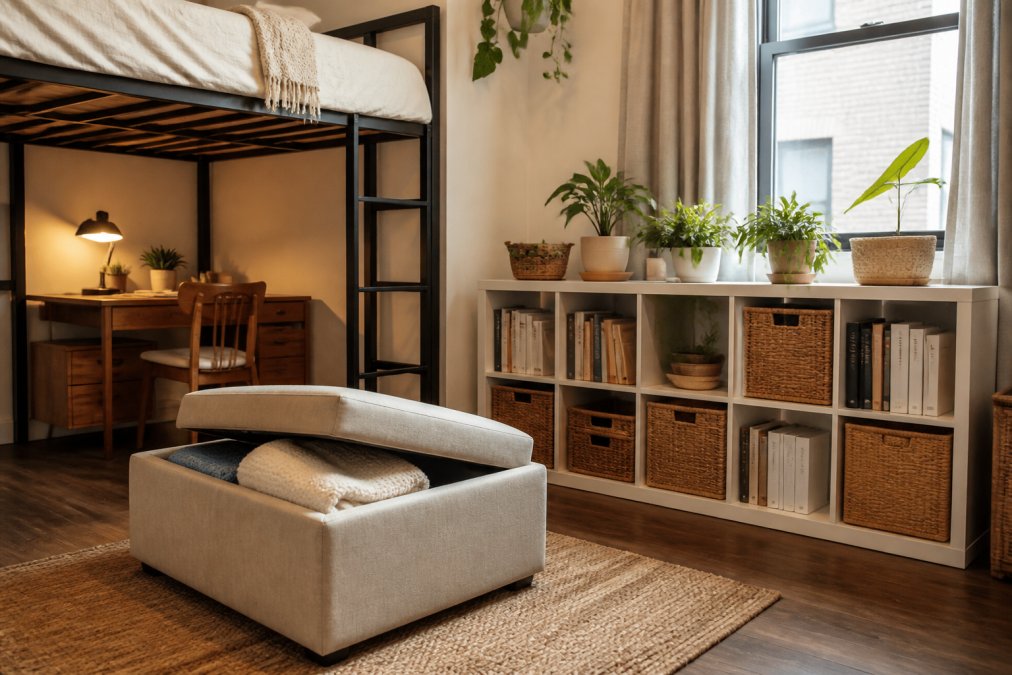
Storage Ottomans, Loft Beds, and Room Dividers
Storage ottomans function as seating, a coffee table surface, a footrest, and hidden storage simultaneously. Use them for extra blankets, board games, or seasonal items.
Loft beds elevate the sleeping surface, creating an entirely new functional zone underneath for a desk, wardrobe, sofa, or additional storage. A loft bed effectively adds a room within a room.
Room dividers with built-in shelving create visual separation between living and sleeping zones (critical in studios) while providing storage on both sides.
How to Organize Small Apartment Storage Room by Room
Tackle one room completely before moving to the next. Momentum from finishing a space carries into the next one.
Closet Organization and Capsule Wardrobe Systems
Closet organization starts with a capsule wardrobe mindset: a curated collection where every piece works with multiple others. Fewer total items means a small closet can contain everything without overflow.
Closet fundamentals:
- Double hanging capacity with a second rod below shorter items.
- Use shelf dividers to stack sweaters.
- Store shoes in clear stackable boxes or a hanging organizer on the closet door.
- Use the top shelf for labeled bins containing seasonal items.
- Add drawer dividers to prevent everything piling together.
Under-Bed Storage and Hidden Storage Solutions
Under-bed storage is the most underused square footage. A standard bed frame sits 7-12 inches off the floor, enough for flat storage bins, rolling drawers, or vacuum-seal bags.
Hidden storage extends beyond the bed:
- Space above kitchen cabinets (rarely used appliances or seasonal items)
- Inside ottomans, benches, and storage beds
- Behind sofa cushions (magazines, remotes, charging cables)
- Inside decorative boxes and baskets on shelves
Label every bin or box. Items stored out of sight get forgotten.
Entryway Hooks, Kitchen Tension Rods, and Bathroom Over-the-Door Organizers
Entryway hooks prevent coat, bag, and key pile-up near the front door. A mounted hook rail (or adhesive hooks for renters) gives every item a designated spot.
Kitchen tension rods are underrated. Install one under the kitchen sink to hang spray bottles. Use them inside cabinets to create vertical dividers for baking sheets and cutting boards. A tension rod across a cabinet opening holds a second row of mugs or glasses.
Bathroom over-the-door organizers solve the small bathroom problem. A single organizer holds toiletries, hair tools, cleaning supplies, and medicine cabinet overflow.
Labeling Systems and Storage Containers That Keep Small Apartment Storage Clutter-Free
A labeling system separates a storage system that lasts from one that devolves into chaos. Every container needs a label, and every label needs to be specific. "Miscellaneous" is not a label, it's an admission the system has broken down.
Effective approaches:
- Label makers produce clean, consistent labels.
- Masking tape and marker works just as well and costs almost nothing.
- Chalkboard labels allow easy updating when contents change.
Clear bins are the gold standard. When you can see what's inside, you're more likely to put things back correctly and less likely to buy duplicates. Modular storage containers that stack and fit together in consistent sizes are worth the investment.
Budget-Specific Storage Tiers: Organizing at Every Price Point
Small apartment storage doesn't require a large budget. Solutions that make the biggest difference are often least expensive.
Zero-cost tier:
- Repurpose shoeboxes as drawer dividers
- Use existing tension rods in new configurations
- Rearrange furniture for better traffic flow
- Declutter to create immediate space
Low-cost tier (under $30):
- Adhesive hooks and strips
- Over-the-door organizers
- Clear stackable bins for under-bed storage
- Drawer dividers
Mid-range tier ($30-$100):
- Freestanding ladder shelves
- Storage ottomans
- Modular cube shelving units
- Closet doubling rods and shelf risers
Investment tier ($100+):
- Loft bed frames with integrated desk and storage
- Custom closet systems
- Floor-to-ceiling tension pole shelving
Start at zero-cost and low-cost tiers first. Decluttering often reveals you need less additional storage than you thought.
PracticalHomeEssentials.com offers a curated selection of storage essentials, modular bins, drawer organizers, storage ottomans, and over-the-door solutions, all delivered with free shipping.
Small apartment storage requires both a system and the discipline to maintain it. Decluttering, vertical solutions, and multi-functional furniture only hold with consistent habits around putting things back where they belong. PracticalHomeEssentials.com offers a curated selection of storage essentials, modular bins, drawer organizers, storage ottomans, and over-the-door solutions, all delivered with free shipping. Start with one room, build the system that works for your space, and expand from there.
Frequently Asked Questions
How do you organize a small apartment with no storage?
Start by decluttering aggressively, less stuff means less to store. Then look up: wall-mounted shelves, over-the-door organizers, and tension rods add storage without using floor space. Multi-functional furniture like storage ottomans and beds with built-in drawers replace items you already own. In a studio apartment, every surface and vertical inch counts. Modular storage bins that stack and label cleanly are the fastest way to create order when built-in storage simply does not exist.
What are the best storage solutions for tiny apartments?
The most effective small apartment storage solutions combine vertical storage, hidden storage, and multi-functional furniture. Wall-mounted shelves and floor-to-ceiling units free up floor space. Under-bed storage containers handle seasonal items and bulk goods. Storage ottomans, loft beds, and room dividers with shelving built in do double duty. For renters, damage-free options like adhesive hooks, tension rods, and freestanding shelving units mean you can set up a full organization system without risking your security deposit.
How can I maximize vertical space in a small apartment?
Mount shelves as high as your ceiling allows and store less-used items at the top. Use over-the-door organizers on every door in the apartment, including closet, bathroom, and pantry doors. Tall, narrow bookshelves and ladder shelves work well in tight floor plans. For renters, adhesive wall strips rated for heavier loads and freestanding floor-to-ceiling tension shelving units require no drilling and leave walls intact when you move out.
How do you keep a small apartment organized and clutter-free long term?
A seasonal rotation system is the most reliable long-term method. Every three months, swap out items you are not currently using, off-season clothing, extra bedding, holiday items, into labeled under-bed or closet bins. Pair this with a simple one-in, one-out rule: when something new comes in, something old leaves. A clear labeling system on every storage container makes it fast to find and return items, which is what actually keeps clutter from building back up over time.
This article was written using GrandRanker